Interactive Scenario-Based eLearning
Projects | | Links:
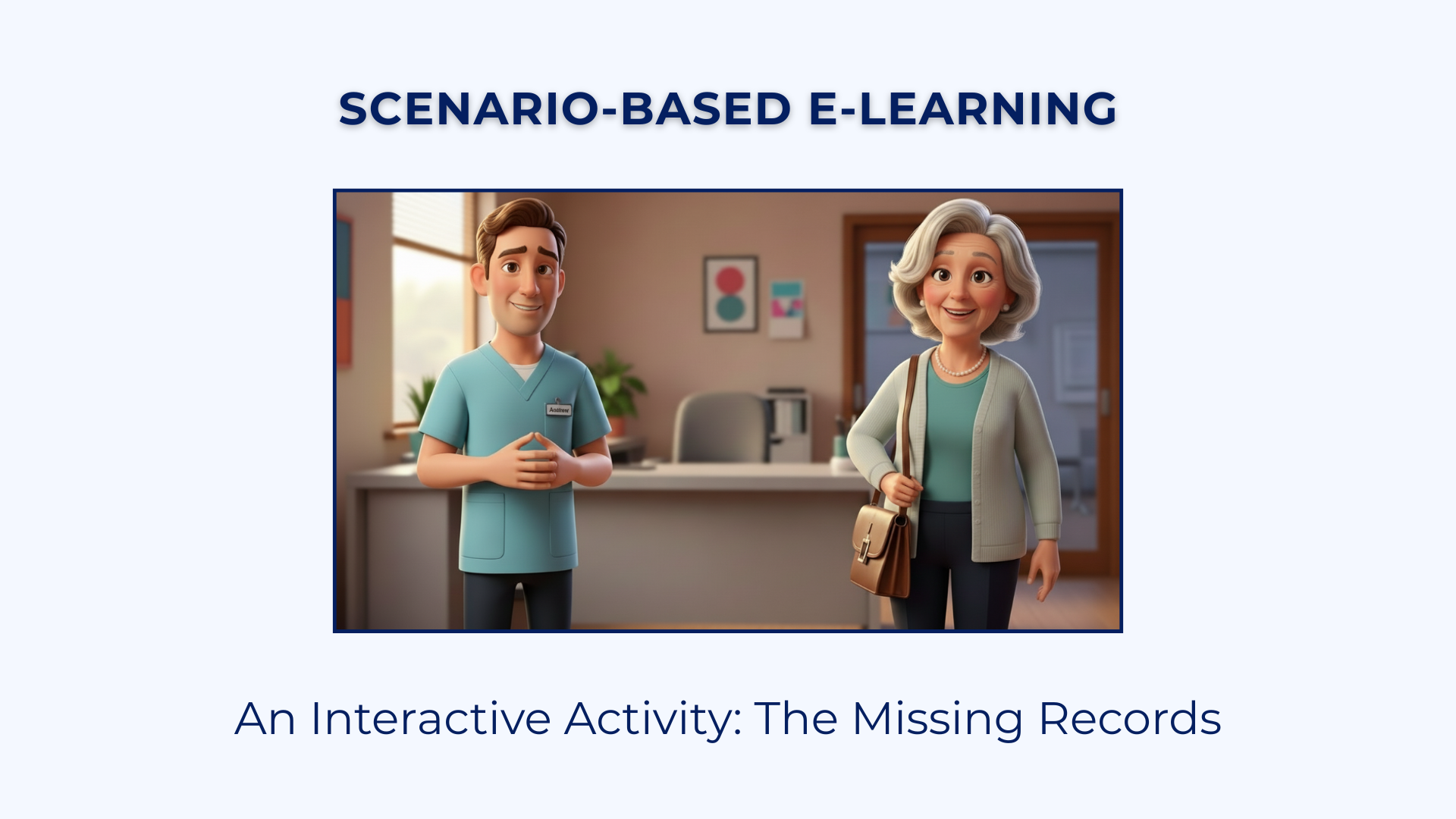
Scenario-Based, Storytelling, Action Mapping, UDL, Articulate Storyline 360, Canva, AI
My Role Instructional Designer
Target Audience New Healthcare Employees
Tools Used Articulate Storyline 360, Canva, ChatGPT, Grok, Whisk
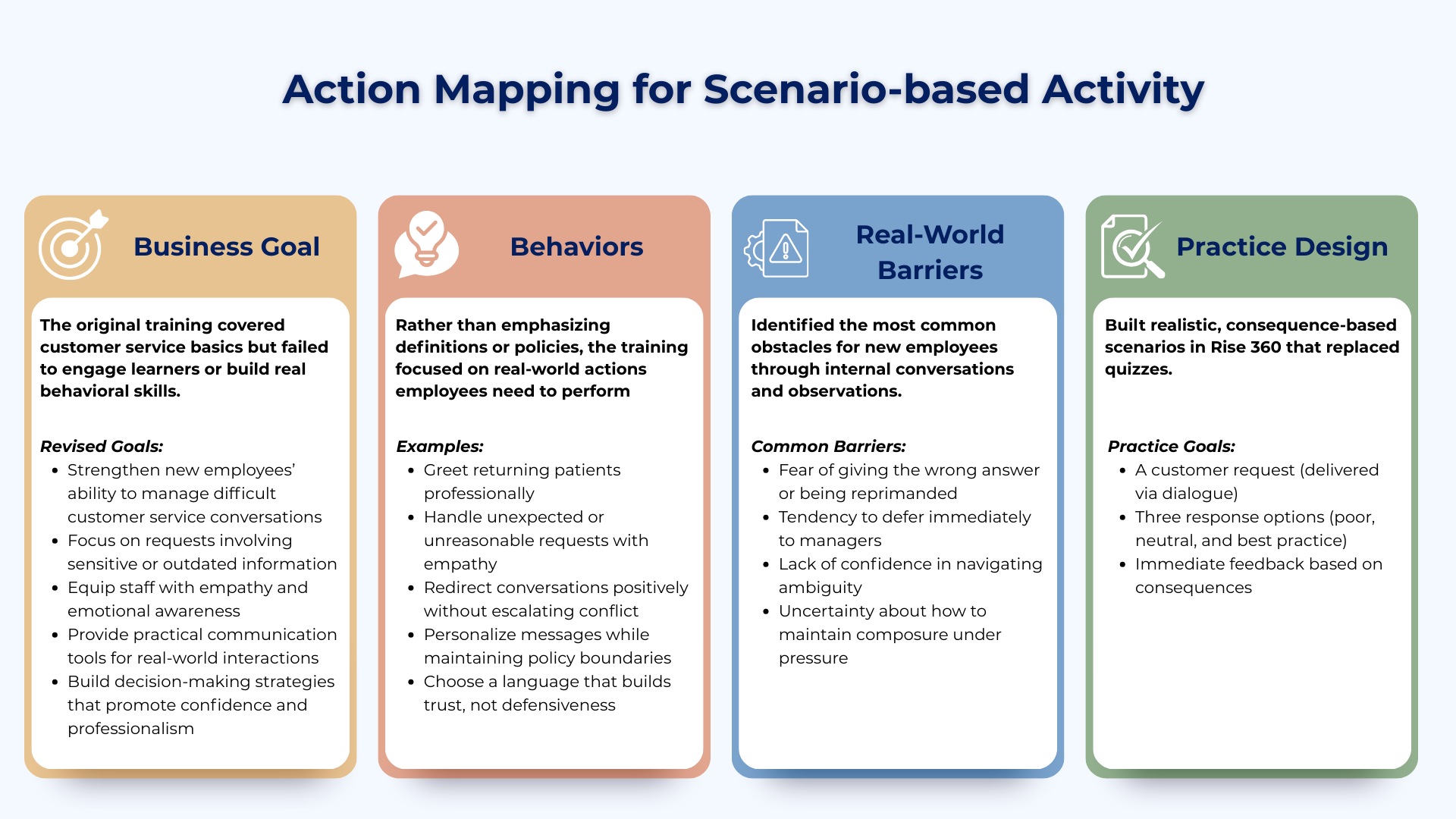
What I Did The original training was a plain-content module that introduced customer service expectations and ended with a short quiz. However, it lacked behavioral depth or emotional engagement. Using Cathy Moore’s Action Mapping model, I built the learning experience from the ground up based on an authentic instructional problem when I revised the training in 2023. Through conversation and feedback from new employees and current staff members, I identified the key behaviors new employees needed to adopt, uncovered the emotional and systemic barriers holding them back, and designed practice activities that allowed for realistic, consequence-based decision making.
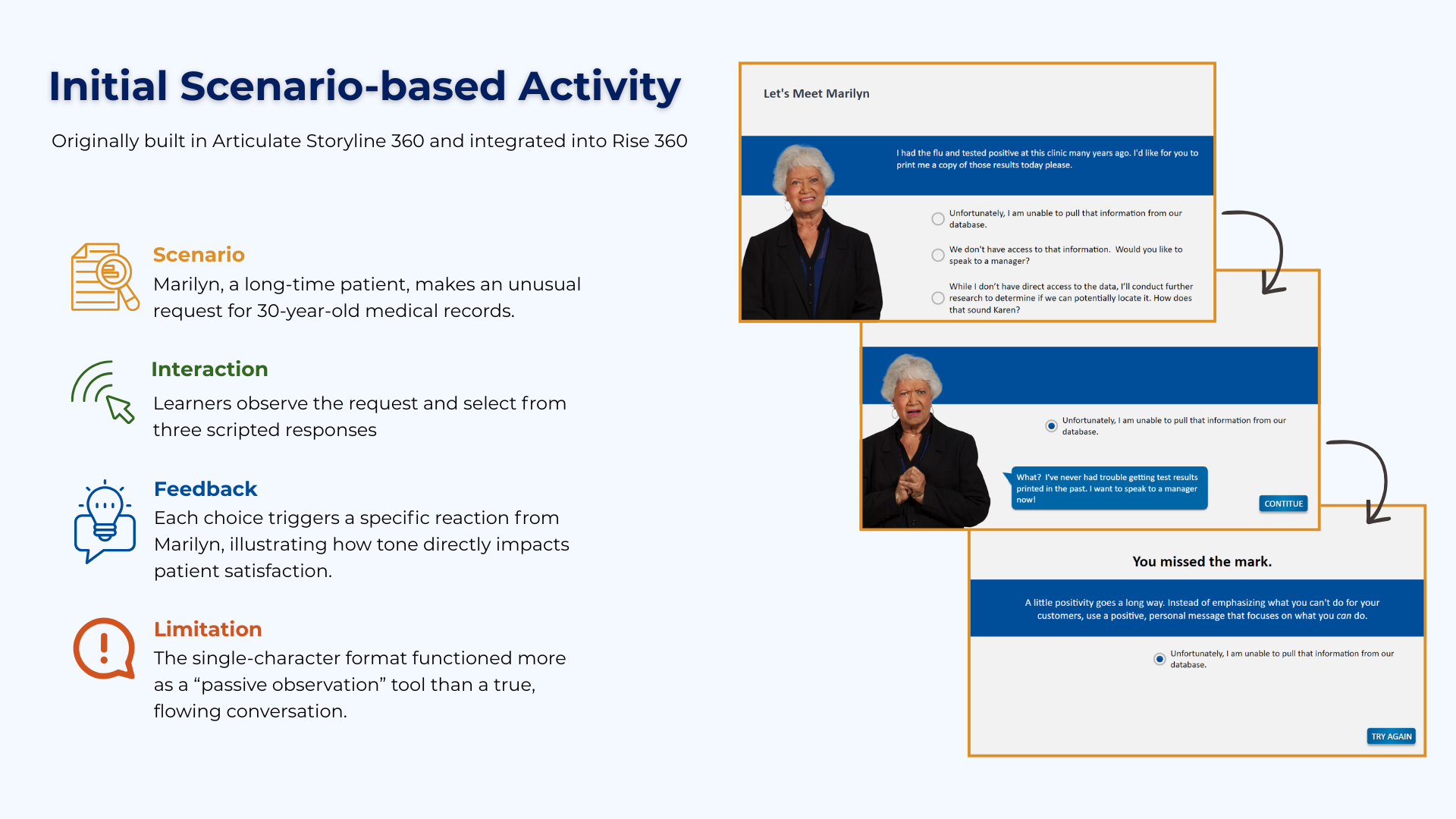
Project Evolution: Customer Service Simulation
The initial scenario-based activity allows new hires to practice high-stakes communication in a safe environment.
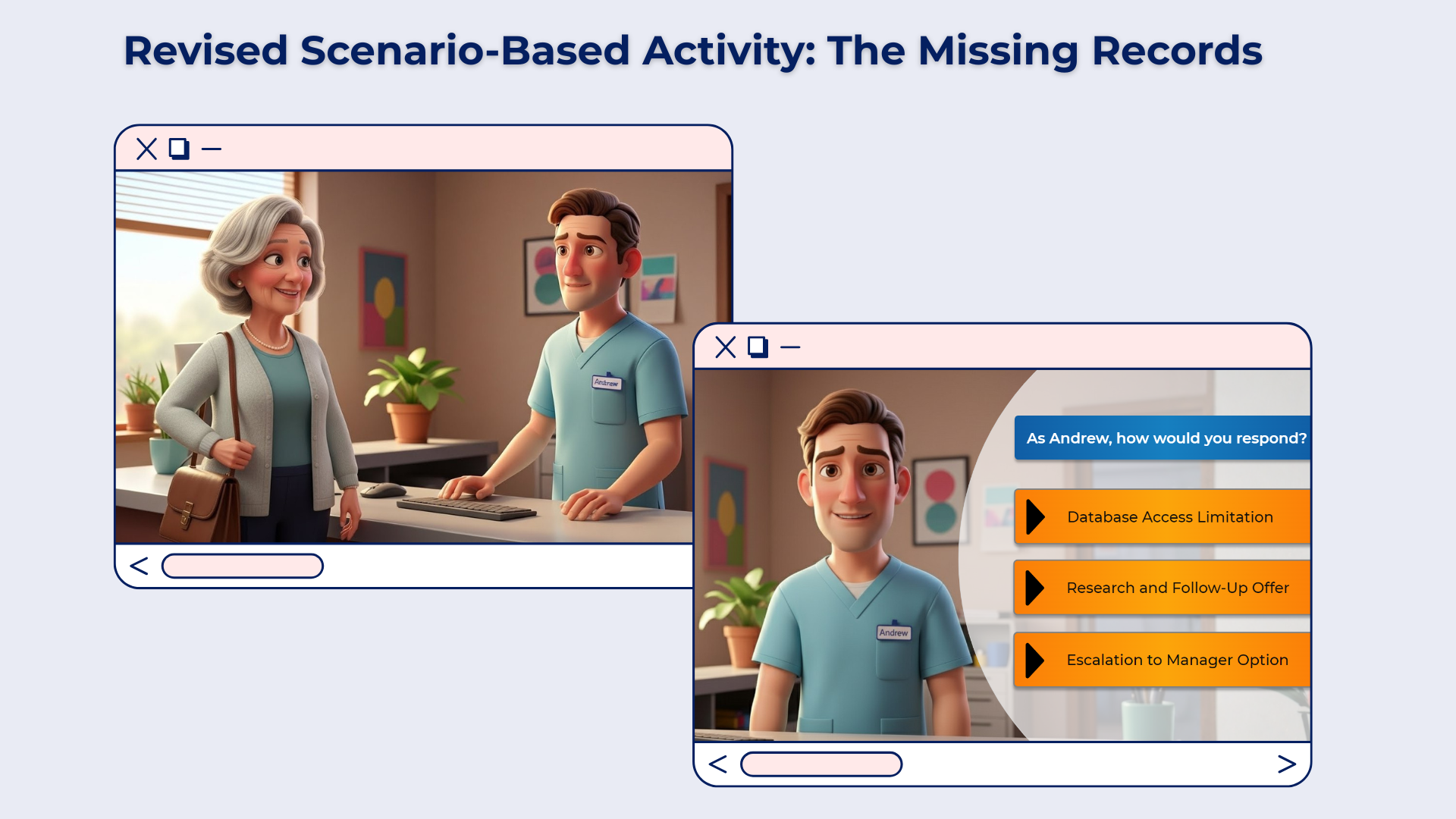
However, after examining the emotional complexity of real clinic interactions, I recognized the need for a richer learning experience. I redesigned the scenario to include two fully developed, interactive characters, allowing for dynamic dialogue, tonal variation, and more authentic, practice‑based decision making within the eLearning experience.
The Development Process
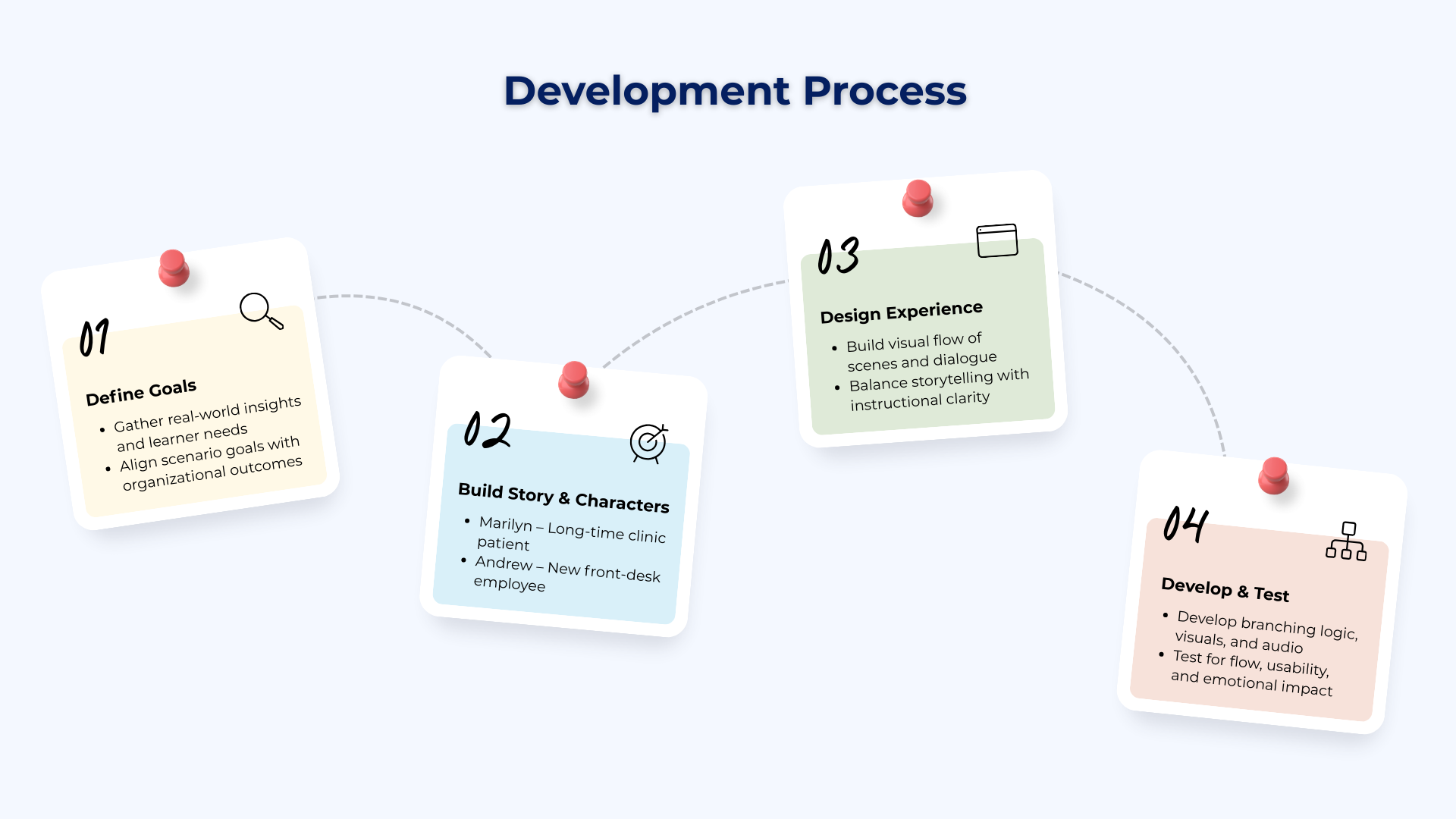
What’s New: The Dual-Character Experience
The updated scenario features two fully developed, interactive characters to provide a more authentic practice environment:
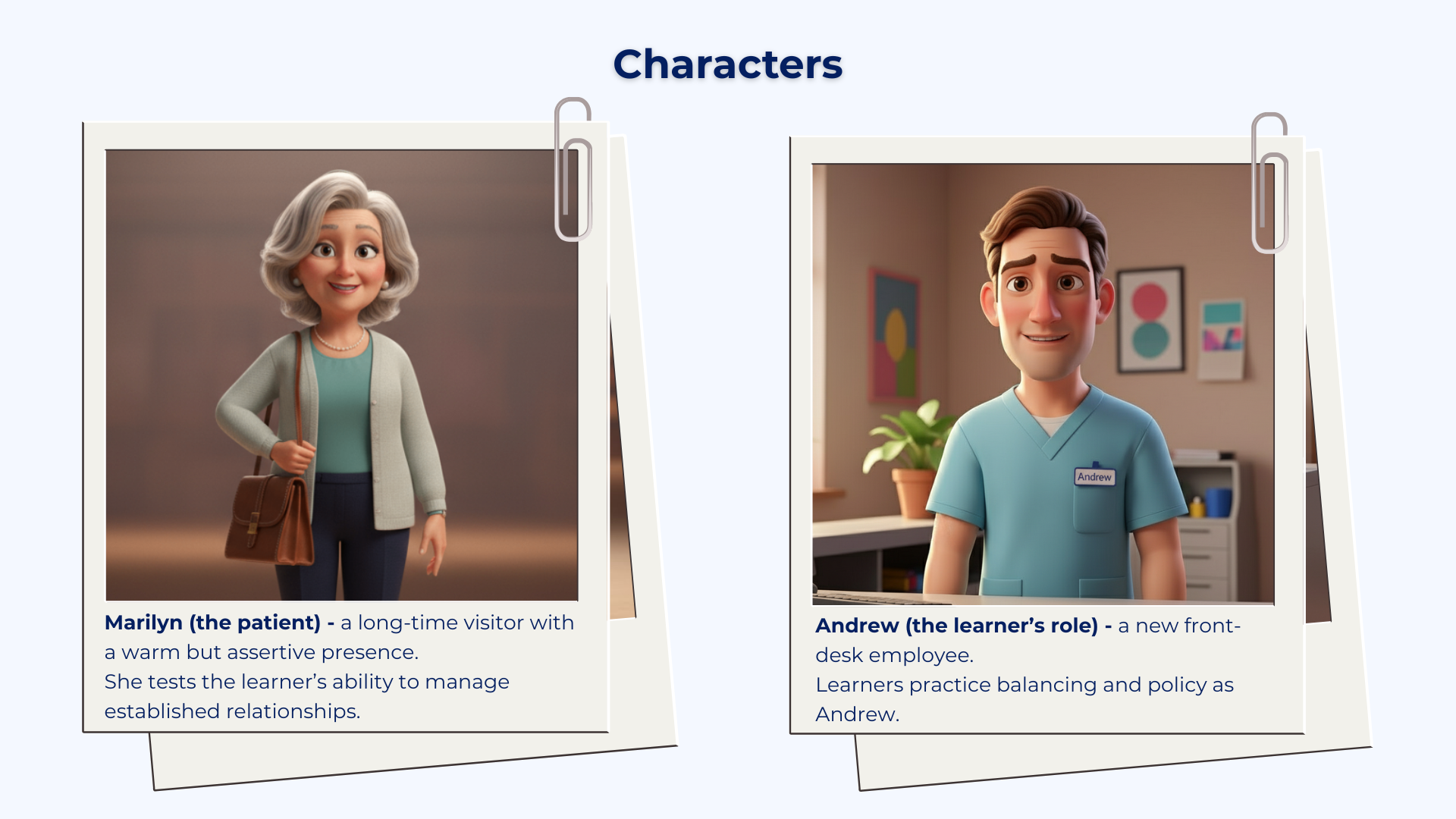
By allowing the learner to step into Andrew’role and navigate multiple outcomes, the scenario moved from passive review to active skill rehearsal.
Why It Works
By shifting to a dynamic dialogue model with character-driven interactions that reflect body language, tone, and facial expression, not just words, learners can now experience:
- Tonal Variation: Learning how to respond when a patient’s mood shifts.
- Dynamic Outcomes: Seeing the direct consequences of their communication choices.
- Decision-Based Learning: Navigating multiple paths rather than just picking a “correct” answer.
Storyboarding
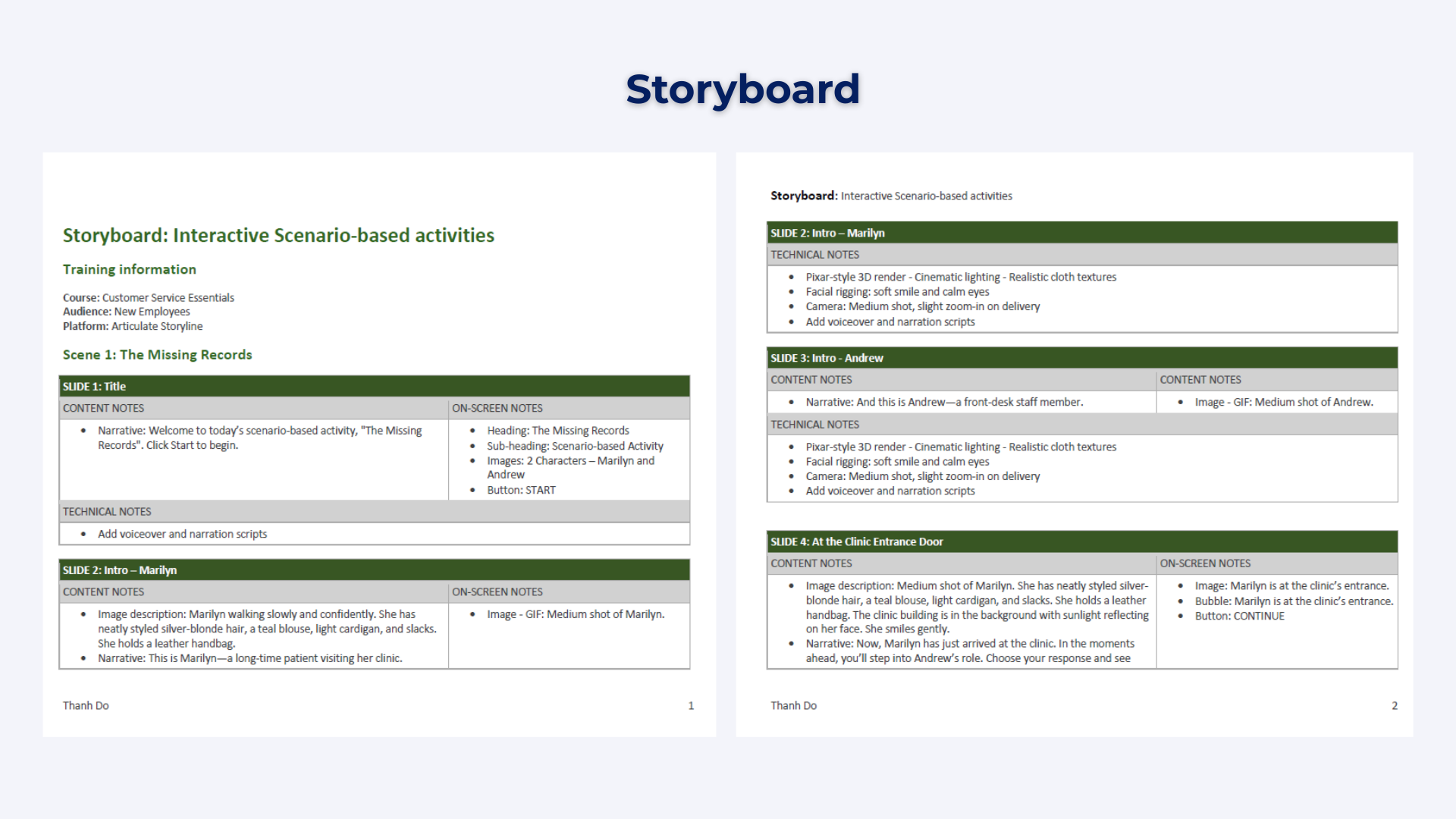
To turn abstract ethics into practical skills, I developed detailed branching storyboards based on real-world tensions.
Strategic Mapping: Every slide was designed with a specific purpose, from character context to feedback loops.
Branching Logic: Decision points were mapped to ensure emotional resonance and instructional alignment.
Result: A structured learning arc that transforms theory into measurable professional growth.
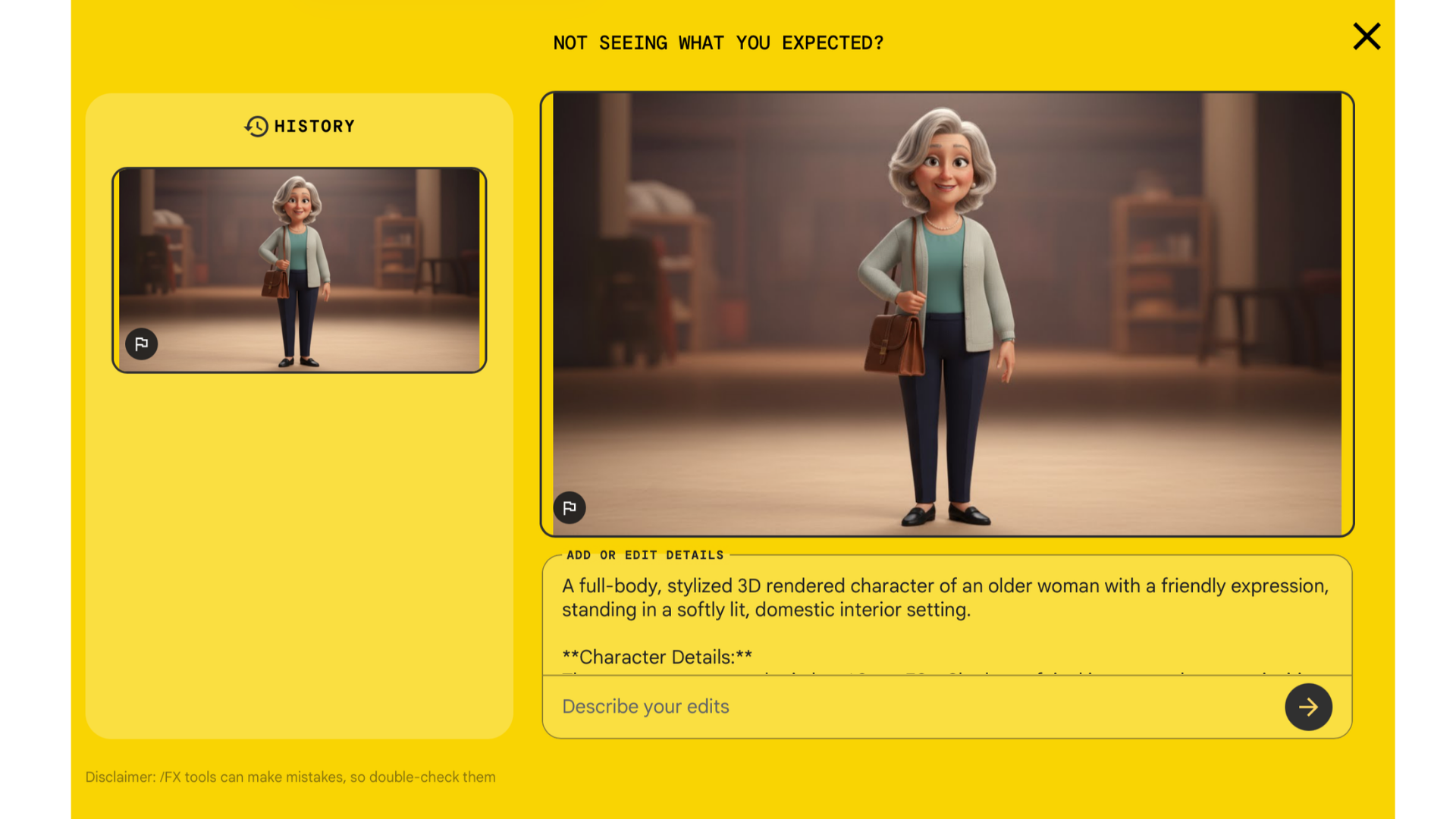
Character Development: Bringing Marilyn & Andrew to Life
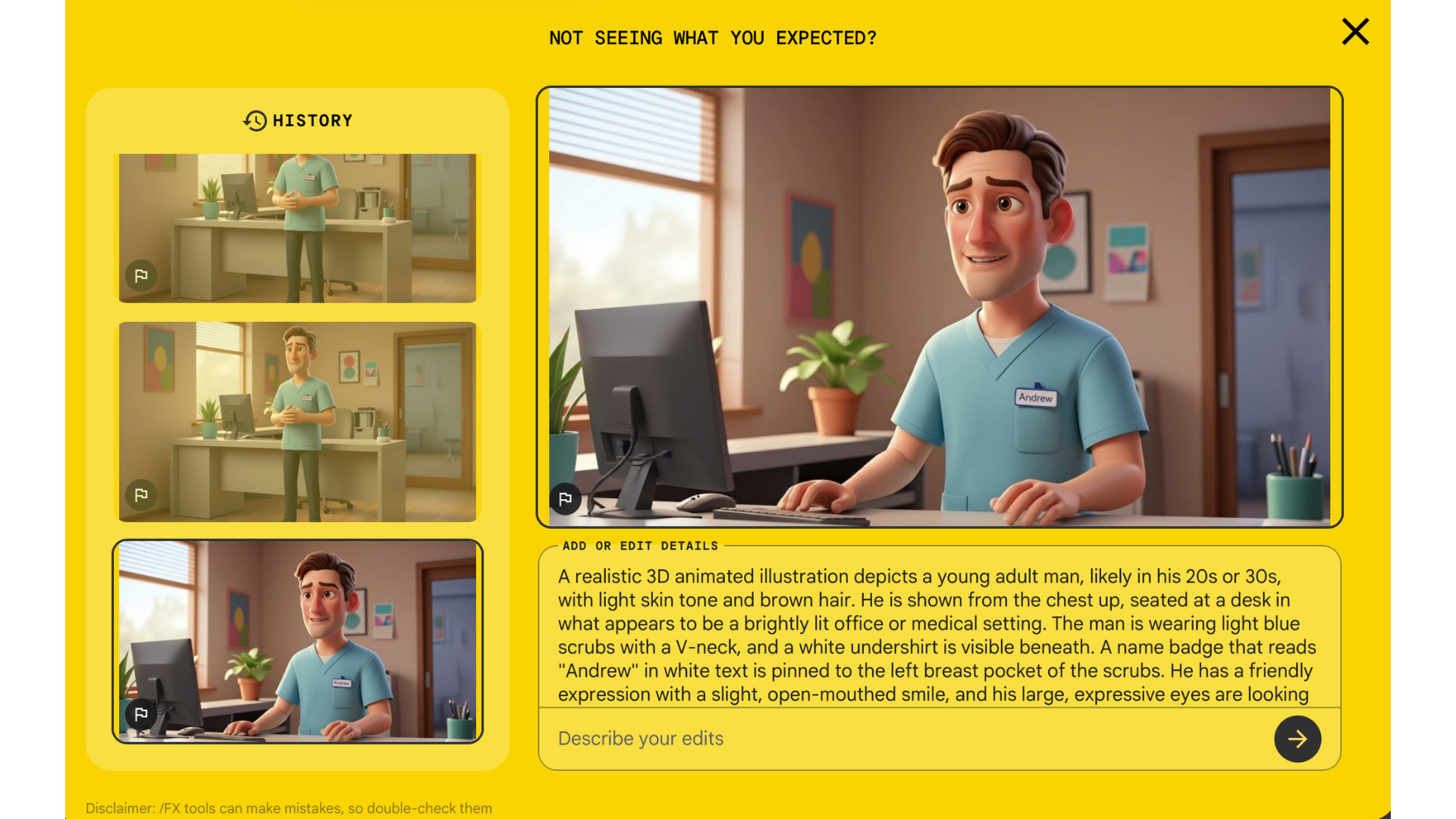
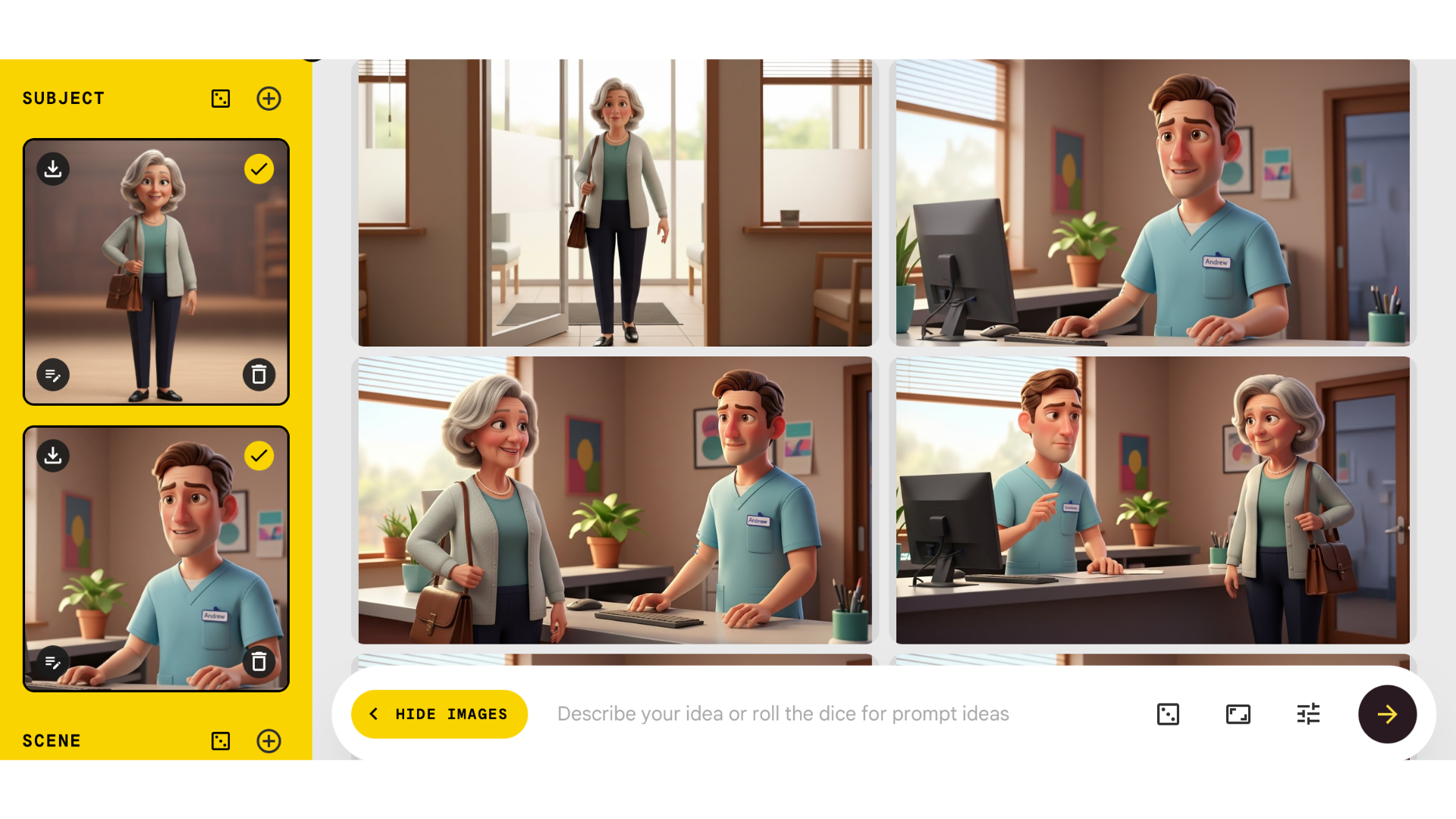
To create an immersive experience, I used Whisk to develop consistent, stylized characters that anchor the scenario’s emotional stakes.
Marilyn: Crafted as a “warm but assertive” long-time patient, requiring a visual style that balances friendliness with authority.
Andrew: Designed as a relatable new employee, with expressions tailored to show the tension of balancing empathy with strict policy.
Workflow: By rendering both characters in multiple poses and angles, I ensured narrative continuity and realistic feedback throughout every branch of the story.
Result: Persistent character design allows learners to connect with the human side of the clinic—making each choice, reaction, and consequence feel more personal and impactful.
Cinematic Interaction: Enhancing Realism with AI Video
To deepen emotional resonance, I integrated short AI-generated videos at key decision points, bringing Marilyn and Andrew to life through subtle expressions and voiced reflections.
Dynamic Storytelling: Used Grok to generate 5–7 second clips that capture nuance—like Andrew’s hesitation or Marilyn’s assertive tone—that static images cannot convey.
Seamless Integration: Leveraged Canva to polish the clips and ensure they blended perfectly with the overall module design.
Strategic Impact: Videos were used at critical junctions to highlight the “human” consequences of a learner’s choice, increasing empathy and engagement.
Result: These cinematic moments move the experience from a standard eLearning module to a high-stakes, realistic simulation.

Reflections & Future Improvements
Developing this activity reinforced how scenario-based design transforms abstract principles into concrete skills. By creating interactive character-driven narratives, I saw firsthand how emotional resonance drives better decision-making.
Key Takeaways
Narrative Impact: Consistent characters help learners recognize patterns in their own professional behavior.
Immediate Feedback: Specific, context-aware reactions guide skill development more effectively than “Correct/Incorrect” prompts.
Future Improvements
Deeper Branching: I plan to expand “consequence chains” to show the long-term effects of decisions on patient satisfaction and clinic workflow.
Inclusive Design: Future iterations will feature robust accessibility updates, including full transcripts and enhanced keyboard navigation.
Data-Driven Coaching: I aim to integrate path-tracking to identify common learner mistakes, helping managers provide targeted follow-up coaching.
Self-Reflection: Adding pre- and post-assessments will help learners self-evaluate and commit to specific behavioral changes in their daily roles.